IF YOU HAVE GHOSTS, THEN YOU HAVE EVERYTHING
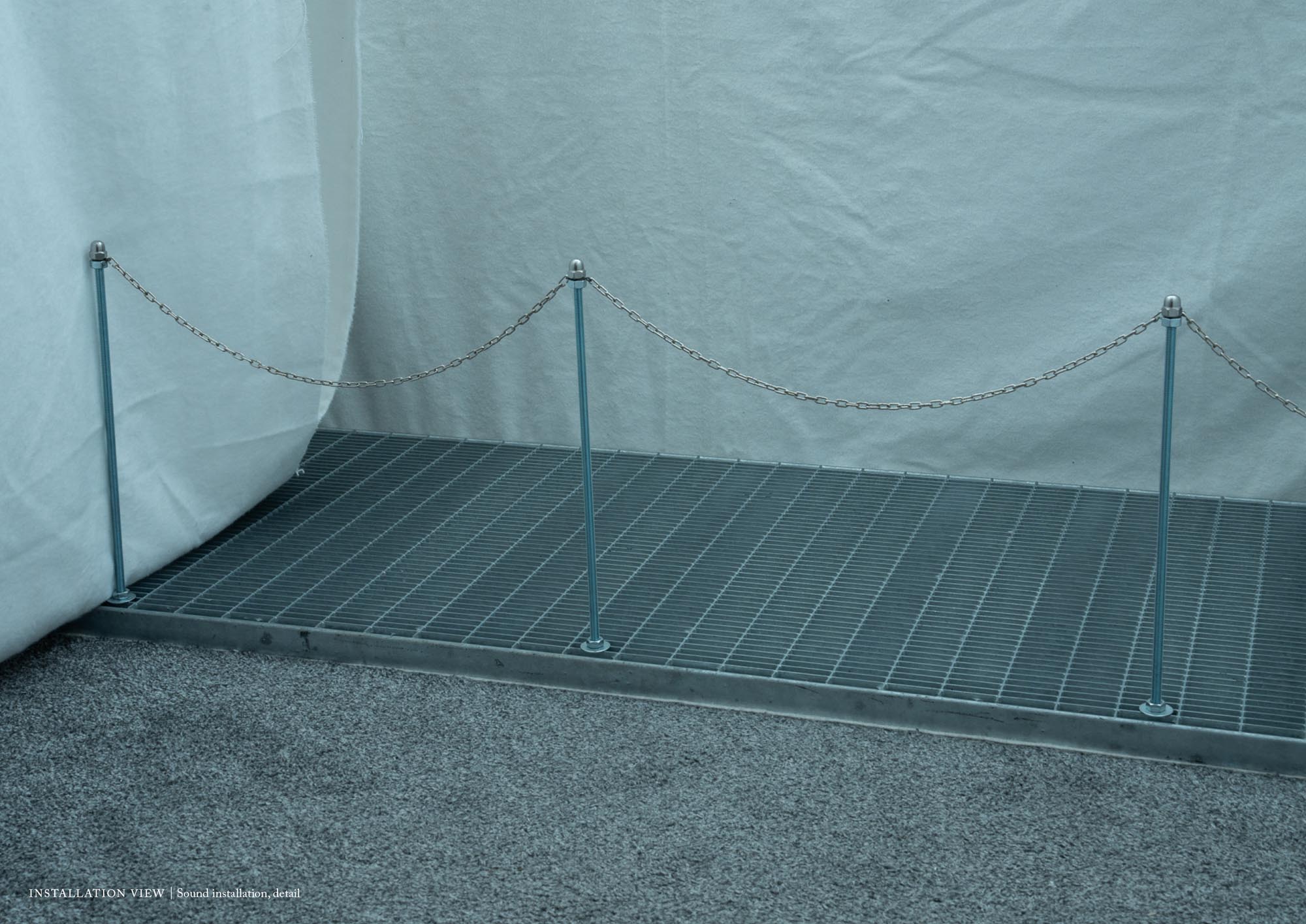
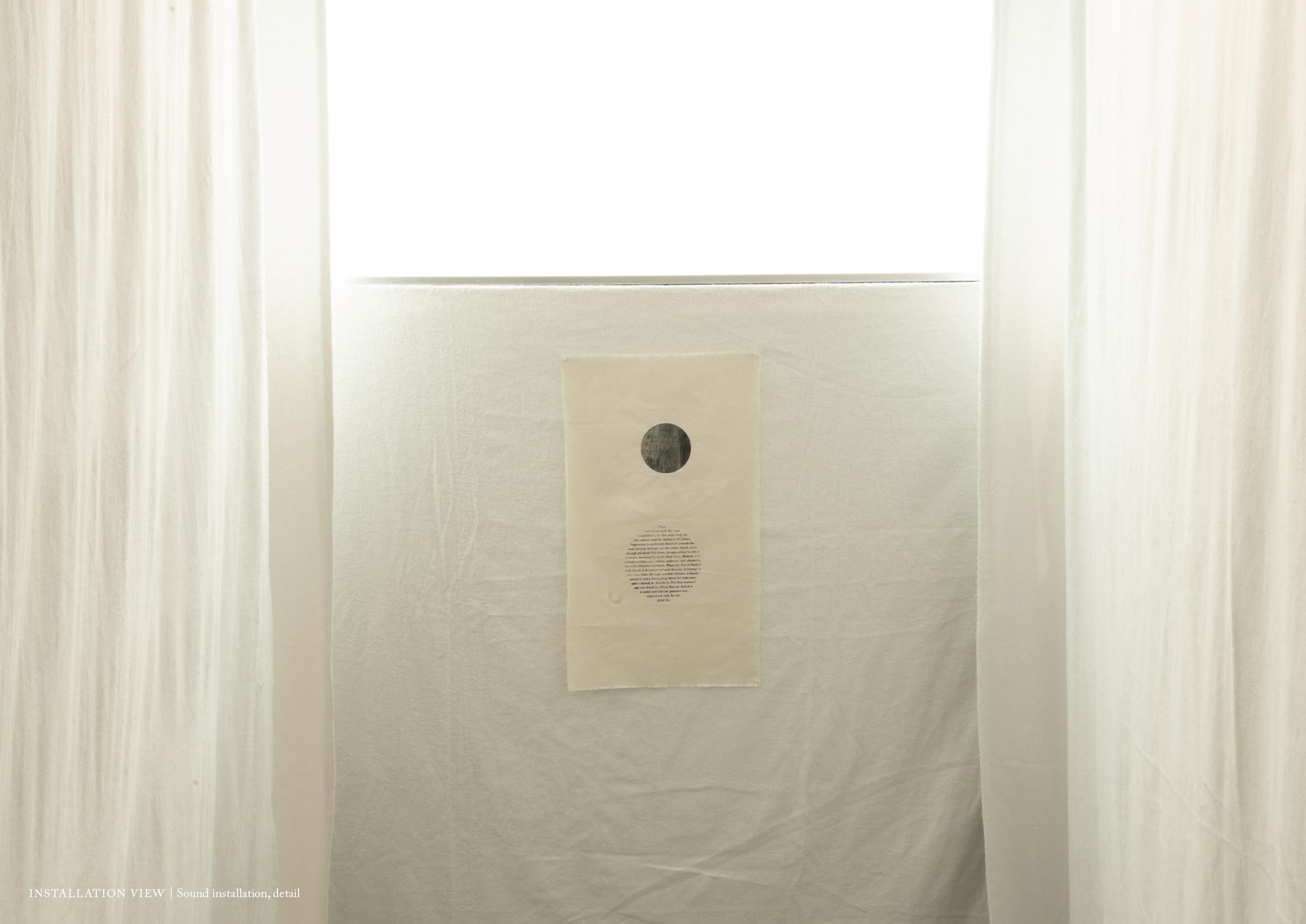
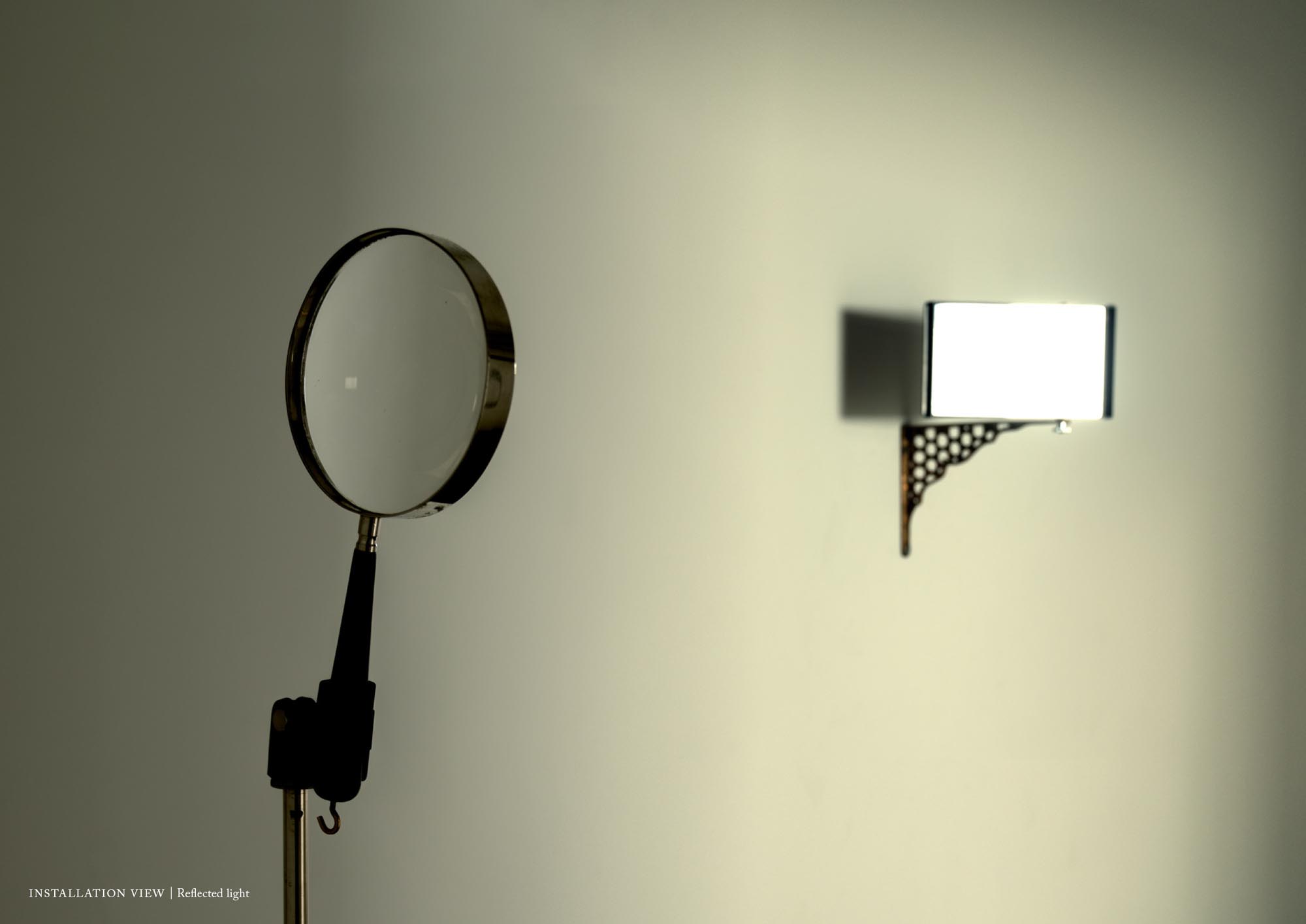
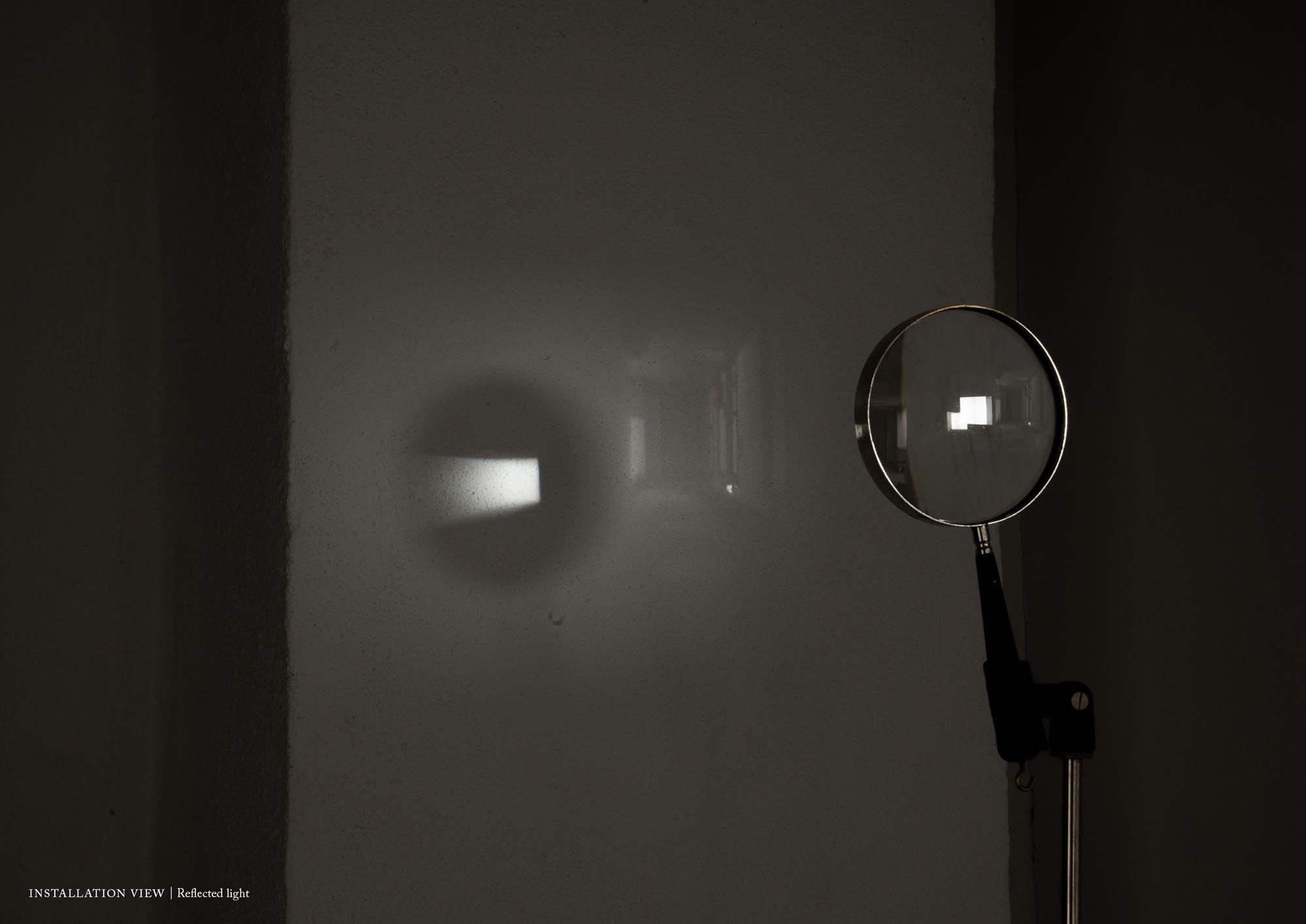
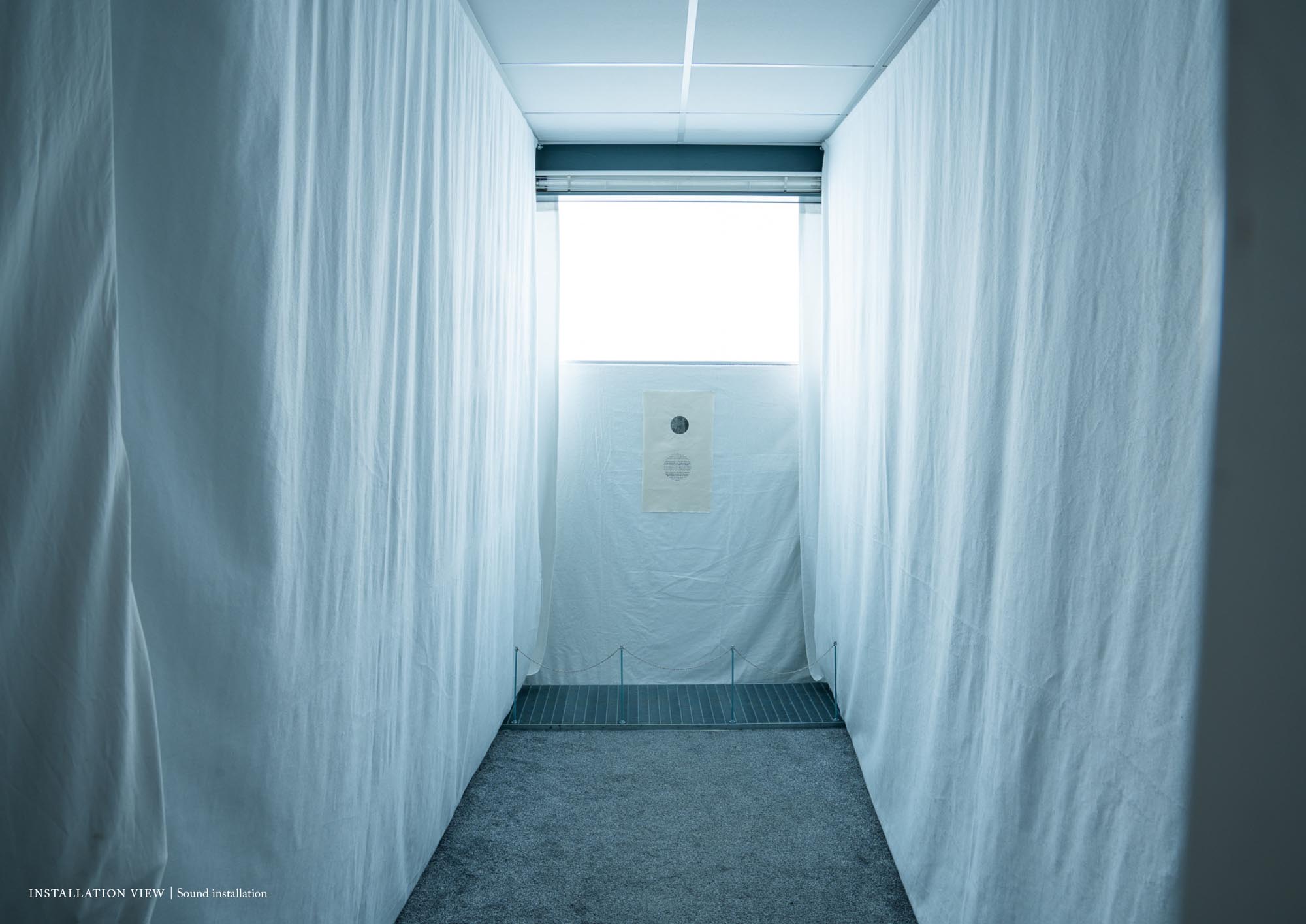
The floor of the room is covered with thick carpeting, white molton fabric is hung from the celing along its walls, forming a narrow, sound absorbing corridor. The room is closed off at the end by a small fence on floor grating. On the wall over the fence hangs a piece of fabric with a text about a man who has ghosts*. Above the text a large piece of frosted glass leans inwards the room, bathing the room with daylight. Outside of the room, a small mirror is mounted on the wall facing the entrence. The mirror send a reflection of the room to a dark part of the hallway outside, where a magnifying glass focuses the reflection to a miniature image on the wall. At the same time the magnifying glass creates an image of the hallway leading up to the room, resulting in a double projection of the inside/outside of the installation.
TEXT AT THE END OF THE CORRIDOR:
If the protagonist has ghosts, then he has everything. They enable him to say and do anything he wants, that is why -when he lost them- he lost everything. Ghosts are veils of spatialized time, unfolding to him as pure, mental views -they are the synthesizer- to all that he perceives, embodying his thoughts and justified beliefs. Nature has a tendency of hiding from him, even when it has already been revealed, like the moon; super-positioned in his periphery (to the left) ”You can call it, surprise there it is!” The moon is the future that he can not see, it is a part of his thoughts in the same way as a part of him is he. As he contemplates the infinity of the wind and its position (also to his left) the prolonging of the before into the after makes him perceive his existence from within. His life is a double exposed projection, and he needs to stay aware to keep the blend in balance. The secret is floating at the very border of his being; on one hand he has ghosts, and on the other, a flux memory of change itself -this is his melody- and (especially at night) that makes him real.